
Varianfry.dk is Varian Fry Online website about the events How many people did Oscar Schindler save thousands of people. Also, we elaborate Varian Fry movie.
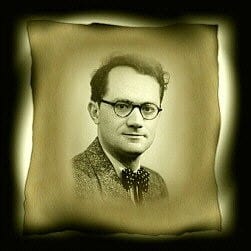
Page about today’s known as the American Schindler, a reference to quotes from Oskar Schindler, who famous heroes of the Holocaust and saved 1200 Jews during the Holocaust – only recently began to win widespread recognition and his exploits are just coming to light. Who was Oscar Schindler? Uring World War II this quiet, faintly absent-minded American famous heroes of the holocaust risked his life to save the heart and soul of Europe during the Varian Fry Holocaust and helped numerous writers, artists, and thinkers escape the Nazis. One of the great men of the twentieth century, a Scarlet Pimpernel.
Like Schindler Varian Fry Holocaust also had a list of life, including 200 of the brightest names in art, science, literature, and medicine. Among those on Varian fry quotes list were painters Marc Chagall, Bernard Reder and Andrè Masson, Nobel laureate physiologist Otto Meyerhof, mathematician Jaques Hadamard, writers Franz Werfel, Hannah Arendt, Heinrich Mann and Lion Feuchtwanger, sculptor Jacques Lipchitz, the Hebraic scholar Oscar Goldberg, Max Ernst, Konrad Heiden, Hans Habe, Wanda Landowska, and many more.
At great personal risk, Varian Fry set up contacts with the French Resistance and the Corsican mob, hired forgers, bribed border guards, and he escorted Franz Werfel and Heinrich Mann over the Pyrenees – his rescue efforts made an indelible influence on our culture.
But unlike Oscar Schindler, whose story became a best-selling book and an Oscar-winning movie, the legacy of Varian Fry Holocaust is little known, and his courageous acts went largely ignored for years.
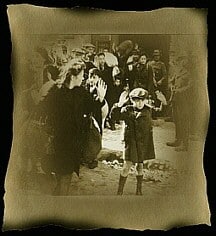
In those times there was darkness everywhere. In heaven and on earth, all the gates of compassion seemed to have been closed. The killer killed, and the Jews died, and the outside world adopted an attitude either of complicity or of indifference. Only a few dared to care …”
One of them was Varian Fry. According to Yad Vashem The famous heroes of the holocaust remembrance authority it is estimated that Fry and his team dealt with some 15,000 cases by May 1941. Of these, assistance was provided to approximately 4,000 people, over 1,000 of whom were smuggled from France in various ways.
When asked as to his motives, Varian Fry quotes responded that when he had visited Berlin in 1935, he saw SA men assaulting Jews in the city’s streets, and he felt he could no longer remain indifferent. When he returned to the US he decided to act:
”I remembered what I had seen in Germany. I knew what would happen to the refugees if the Gestapo got hold of them … It was my duty to help them … Friends warned me of the danger. They said I was a fool to go. I, too, could be walking into the trap. I might never come back alive.”
At the age of 32, Varian Fry had found his vocation …
– Louis Bülow